
 Written by: YEUNG Ming Ha, Registered Chinese Medicine Practitioner
As we move into early autumn, in addition to starting to feel the cool breezes, we also notice that many of our friends around us have started to “itch”, and skin problems have come knocking on the door again! Many people have rushed to seek medical attention, constantly inquiring whether they have already contracted incurable eczema. Although eczema itself has different categories, in terms of the pathogenesis, there are many similarities with skin sensitivity. How exactly should we distinguish between skin sensitivity and eczema? Is eczema really as terrible as it seems?
- Causes of the Condition
Eczema is a common type of allergic dermatitis that is not contagious. In traditional Chinese medicine, it is referred to as “damp sores”, and it is a very common skin condition. The internal factors of eczema include constitution, emotions, and organ dysfunction, while the external factors include wind, dampness, and heat obstructing the skin. “Where evil congregates, the vital energy must be deficient.” When the body’s righteous qi is weakened, and the immune system function is reduced, wind, dampness, and heat evils permeate the skin, leading to the development or worsening of eczema.
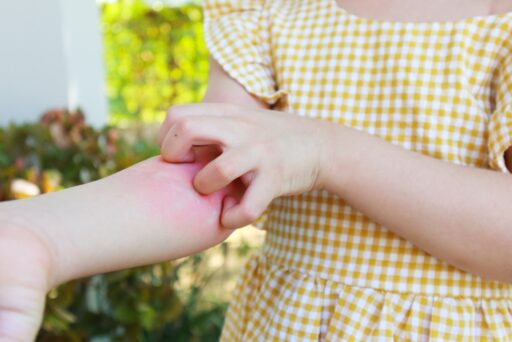
Skin sensitivity, also known as urticaria, is closely related to certain food sensitivities or contact with substances. There are two common types of skin sensitivity. The first is an allergic reaction triggered by exposure to external irritants such as metals, dust mites, and chemicals. The second is caused by food sensitivity, which can lead to varying degrees of skin sensitivity issues, including redness, dryness, and peeling, as well as intense itching that may result in a “scratching” sensation.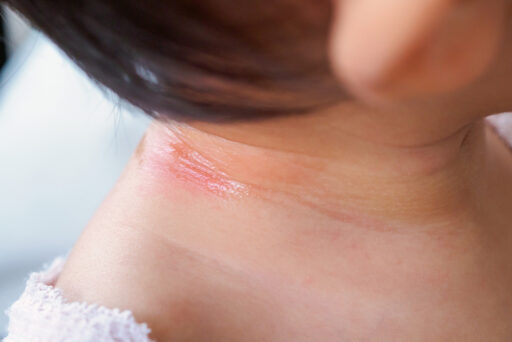
- Differences in the Appearance of the Affected Areas
In terms of the appearance of the skin rash, skin sensitivity generally presents with redness, and even urticaria, which can worsen after scratching. Acute eczema can manifest with red rashes, oozing, and even bleeding, while chronic eczema can lead to thickening of the stratum corneum, an uneven surface, dryness, and even cracking. Once this thickened stratum corneum is scratched off, it can not only cause bleeding, but also result in oozing. Moreover, eczema can occur on any part of the body, such as the ears, head, face, hands, navel, and legs, but in a symmetrical distribution. Patients often experience intense itching, and when they scratch the affected areas, it can lead to skin erosion, oozing of serous fluid, and even the formation of thick crusts. The repeated episodes can make the skin surface rough and with raised lesions.